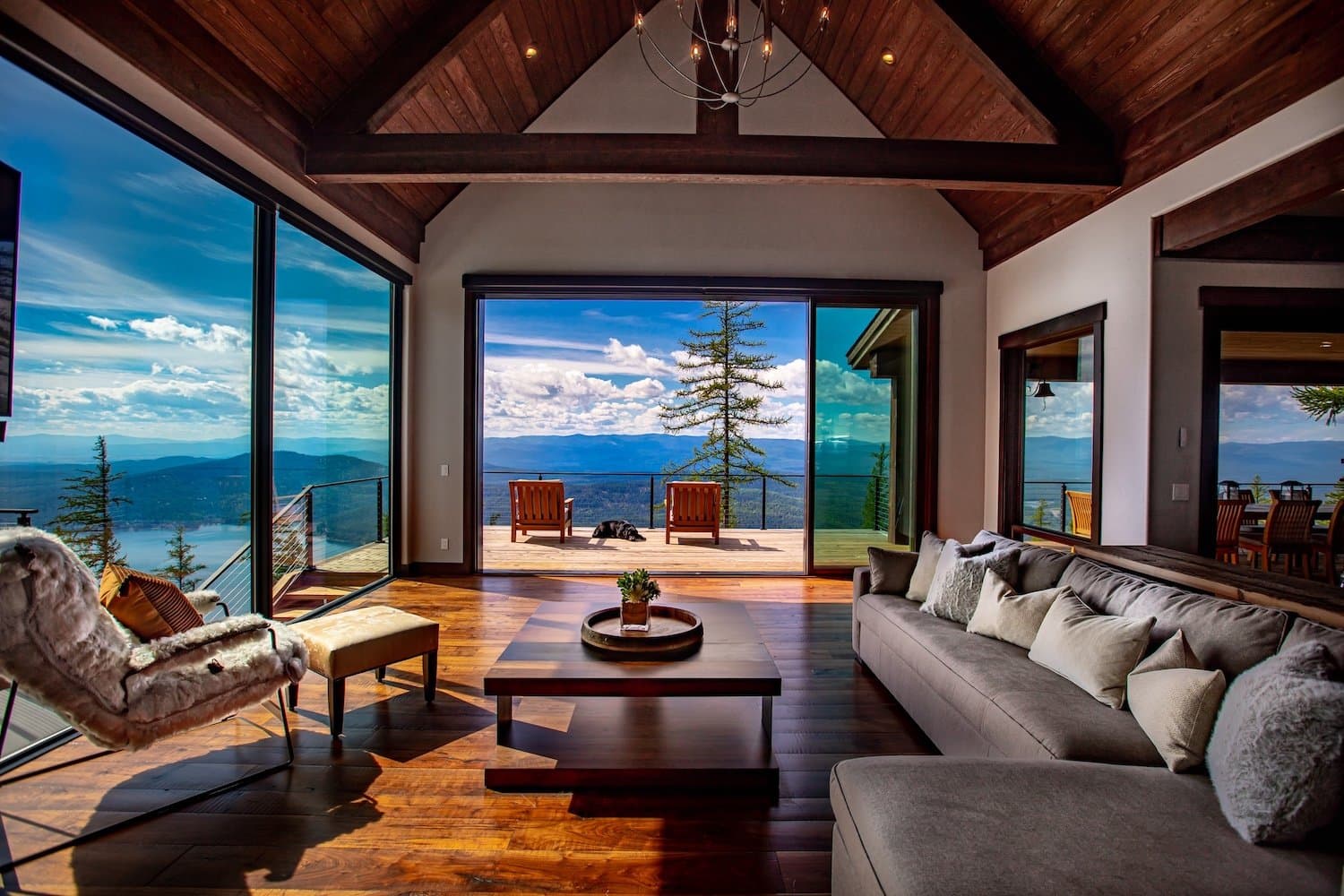
Building a custom home in Whitefish Montana
From finding the right lot to vetting builders and understanding 2026 costs, this honest guide walks you through building a custom home in Whitefish, Montana.
custom home Whitefish Montana
Short Answer
Whitefish draws people who want the mountain, the lake, and a town with a working main street, and many of them eventually decide they would rather build than buy. A custom home lets you site the house for the light, the view, and the way you actually live. It also asks more of you: more time, more decisions, and more money than most people first estimate. Ashley Inglis has walked buyers and sellers through Western Montana's luxury markets long enough to be candid about both sides. This guide lays out the path honestly, where the lots are, how to vet a builder, what 2026 numbers really look like, and where projects tend to go sideways.
Finding and Evaluating a Lot
Land is the first decision, and in Whitefish it is rarely the cheap part. That spread reflects four very different kinds of ground:
In-town lots. Smaller parcels inside city limits sit on municipal water and sewer, which removes the cost and risk of a well and septic system. You trade acreage and privacy for walkability and simpler utility hookups. These are often the most build-ready option.
Ski-area parcels. Lots near Whitefish Mountain Resort, places like the Iron Horse area, come with views and slope access, but also steeper terrain, longer driveways, and snow-load and access considerations that add cost.
Lakefront. Whitefish Lake frontage is the scarcest and most expensive category, with a typical handful of land listings available at any time. Expect lakeshore protection regulations, setback rules, and septic siting to shape what you can build.
Acreage. Larger parcels outside city limits offer privacy and room, but usually require a well, a septic system, and possibly a private road, costs that are easy to underestimate.
Before you fall for a view, evaluate the dirt. Confirm what utilities reach the property line versus what you would have to bring in. Ask about soil and percolation for septic, slope and drainage, easements and access, and whether the lot sits in a wildfire-prone zone that triggers defensible-space requirements. A strong builder here is not just a good carpenter; they understand mountain terrain, snow loads, wildfire-defensible-space codes, and the seasonal reality that the building window narrows in winter.
When you vet a builder, treat it like hiring rather than shopping. A few things to confirm:
License and insurance. Verify the builder is registered with Montana's Department of Labor & Industry and carries both liability and workers' compensation coverage.
Local track record. Prioritize builders who have completed several homes in Whitefish specifically and know the city's hillside, snow-load, and wildfire requirements.
References you actually call. Ask for recent clients and past subcontractors, and call them. Subs will tell you whether the builder pays on time and runs an organized site.
Transparent budgeting. Ask how they handle allowances, change orders, and cost overruns. A clear contract with a realistic contingency line is worth more than the lowest bid.
Communication style. You will be in a relationship with this person for a year or more. If communication is vague during courtship, it rarely improves under deadline pressure.
The cheapest bid is often the most expensive home by the time it is finished. Whitefish does not behave like the statewide average. Weather delays, supply-chain swings, and surprises in the ground are not rare events here; they are the baseline assumption. These are ranges as of 2026 and will move with materials, labor, and the specifics of your lot, treat any single number as a starting point for a real conversation with a builder.
Timeline and Permitting
Inside Whitefish city limits, all new construction requires a building permit, and plans must comply with the 2021 family of international codes (IBC, IRC, IECC, and related), along with the 2020 NEC and wildland-urban-interface provisions. Applications are submitted through the city's online citizen portal, and plans must be detailed enough that the home could be built from the documents alone. Building outside city limits puts you under Flathead County Planning & Zoning, which publishes its own 2026 submittal deadlines and fee schedule.
On timeline, plan in years, not months. Design and engineering typically run several months. Permitting and plan review add more, and the review clock is slower when wildfire, hillside, or lakeshore rules apply. Construction itself often runs twelve to eighteen months for a custom home, and Montana winters compress the workable season. A realistic, view-it-from-the-start estimate is roughly two years from "we found the lot" to "we move in." Rushing the front end, design and permitting, is where most schedules quietly break.
Buy-vs-Build Math
Building is not automatically the better deal, and Ashley will tell you that plainly. Building wins when you want exactly the home, on exactly the lot, that does not exist on the market, and when you have the time, cash reserves, and tolerance for decisions and delays. Buying wins when you want certainty: a known price, a known move-in date, and no exposure to overruns.
Run the honest comparison. Add land, hard construction, design, permits, utilities, and a real contingency, then compare that all-in number to what a comparable finished home is selling for today. In some Whitefish micro-markets, building pencils out close to or below buying; in others, the premium for new construction is real. Carrying costs matter too, a year or two of paying for land, a construction loan, and somewhere to live in the meantime adds up. The math is personal, and it deserves more than a back-of-the-envelope guess.
Common Pitfalls
A handful of mistakes recur:
Buying the lot before understanding its true build cost. Steep grade, poor soil, long utility runs, and wildfire rules can swamp a "good price."
Underbudgeting contingency. Ten to fifteen percent is not padding here; it is the cost of building in a mountain market.
Choosing on bid price alone. The low number often hides assumptions that become change orders.
Ignoring the seasonal window. Starting late in the year can stall a project through winter and add months.
Designing beyond resale. Over-customizing for one taste can make the home harder to sell later, worth weighing even if you plan to stay.
For deeper context on the local market, see Ashley's guide to luxury homes in Whitefish and what to know before buying, the Whitefish relocation guide, and the Whitefish community overview.
Working With Ashley Inglis
Building a custom home in Whitefish is a multi-year commitment with real financial exposure, and the lot decision is where a knowledgeable agent earns their keep. Ashley Inglis helps clients find and evaluate land before they are emotionally committed, run honest buy-vs-build numbers, and connect with reputable local builders, then represents their interests through the process. She holds Montana broker license RRE-BRO-119277.
If you are weighing a custom build in Whitefish, Bigfork, Hamilton, or the surrounding area, reach out to talk it through before you commit to a lot. Visit the office at 102B Main St, Stevensville, MT 59870, call (406) 880-5985, or email ashleyinglis@ainglisrealty.com. Lakefront is the scarcest and most expensive category.
How long does it take to build a custom home in Whitefish?
Plan on roughly two years from finding the lot to moving in. Design and engineering take several months, permitting and review add more, and construction itself often runs twelve to eighteen months, compressed further by Montana winters.
Do I need a building permit, and which codes apply?
Yes. All new construction inside Whitefish city limits requires a permit, submitted through the city's online portal, with plans meeting the 2021 international code family, the 2020 NEC, and wildland-urban-interface provisions. Building outside city limits falls under Flathead County Planning & Zoning.
Is it cheaper to build or buy in Whitefish?
It depends on the micro-market and your priorities. Building can pencil out close to or below buying in some areas and carry a real premium in others. Add land, construction, design, permits, utilities, contingency, and carrying costs, then compare to comparable finished homes before deciding.
What should I look for when hiring a Whitefish builder?
Confirm the builder is registered with Montana's Department of Labor & Industry and carries liability and workers' compensation insurance, has completed several homes in Whitefish, understands snow-load and wildfire-defensible-space codes, communicates clearly, and budgets transparently. Weather delays, supply-chain fluctuations, and site surprises are common in mountain construction, so this is a baseline assumption rather than optional padding.
Work With Ashley Inglis in Custom
Ashley Inglis helps buyers compare homes and neighborhoods across Whitefish, Lakeside, Polson, Big Fork, Kalispell, and Columbia Falls. Use the next conversation to turn commute pattern, neighborhood fit, HOA or metro-district tolerance, school-boundary checks, and current inventory into a practical tour plan.
- Service areas: Whitefish, Lakeside, Polson, Big Fork, Kalispell, Columbia Falls, Missoula, and Lolo
- Office or service-area location: Service-area business serving Whitefish, Lakeside, Polson, and Big Fork
Related Local Market Resources
Get in Touch
Ready to talk about your Montana move?
Ashley Inglis and the MT Lux team are ready when you are. Reach out for a private consultation about buying, selling, or just exploring the market.
More Reading