Bitterroot Valley Guide
Living in the Bitterroot Valley — A Local Guide
An honest read on what daily life in the Bitterroot is actually like — the good, the limited, and the worth-knowing — from a Stevensville broker who works the full valley.
Recognized Excellence



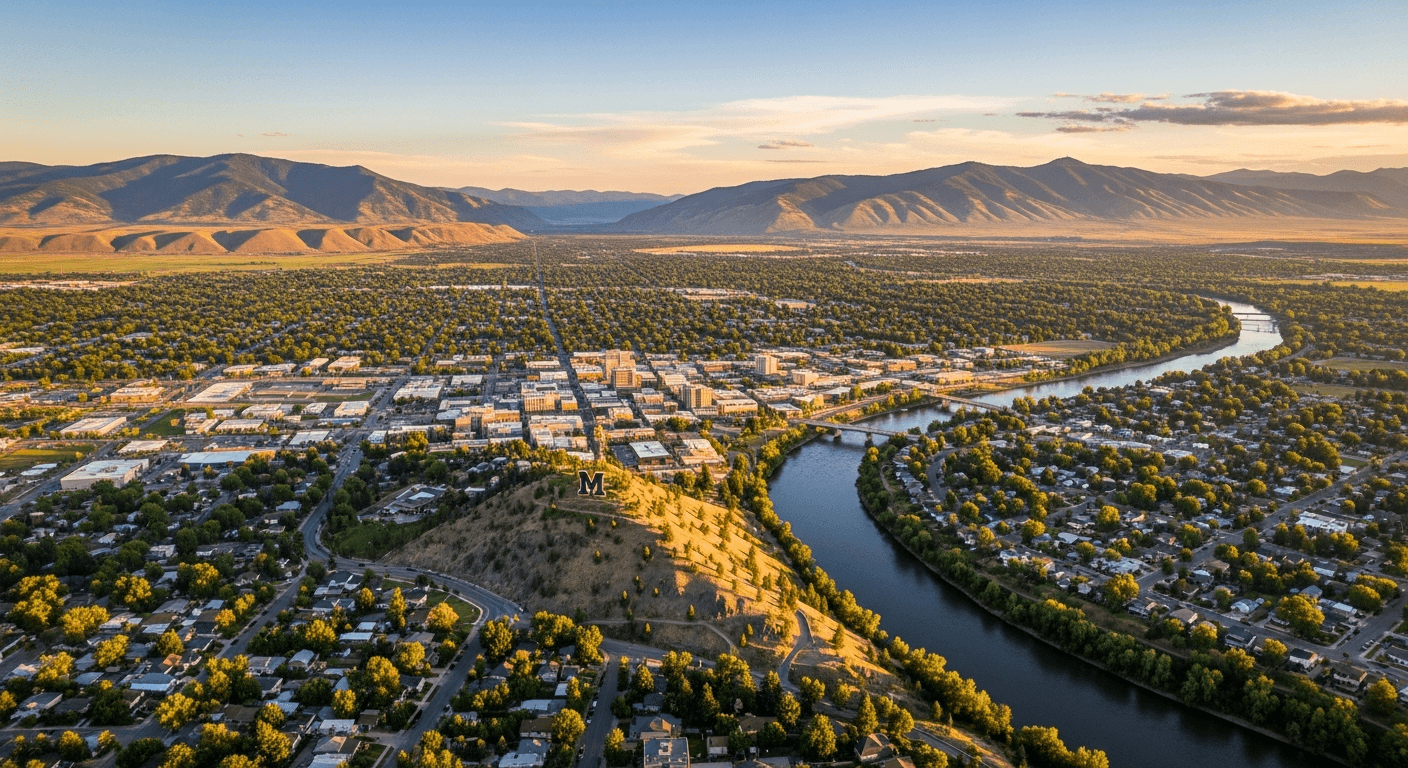
Living in the Bitterroot Valley is a real-life version of what most relocation brochures only sketch. The mountains are visible from every Main Street, the river runs through nearly every town, and the agricultural rhythm of the valley still sets the pace. That is the part nobody disputes. The part this guide focuses on is the everyday — what groceries cost, where you drive for an airport, what winters actually feel like, what the schools deliver, what the social fabric is, and where each of the six valley towns fits if you are weighing them.
Ashley Inglis works the full corridor from a Main Street office in Stevensville — RealTrends Verified 2025, REALM, CLHMS, ABR — and this guide is written from that on-the-ground perspective rather than from a marketing kit.
The Rhythm
What Daily Life Actually Looks Like
The valley runs on a small-town rhythm. Most people know their neighbors. The grocery clerk in Stevensville knows the school principal in Hamilton. The fly-shop owner in Victor probably guided one of your river days last summer.
- Mornings: Coffee on a porch with mountains in two directions. Walking dogs along the Bitterroot. Driving north to Missoula on US-93 in commuter traffic that backs up but never gridlocks.
- Midday: Errands run in town — Hamilton has the broadest range of services in the valley, Stevensville is the historic Main Street, Florence has the commuter-feeder strip. Costco and a hospital trauma center mean a Missoula drive.
- Afternoons: The river is usually 10 minutes away from any valley address. So is national-forest trail access. People plan around it, not as a vacation, just as Tuesday.
- Evenings: Small-town downtowns that close earlier than a city. A handful of legitimately good restaurants in Hamilton and Stevensville. A real bar scene exists but it is small and locally-owned, not chain-driven.
- Weekends: Lake Como, Painted Rocks Reservoir, Lost Trail Powder Mountain in winter, Trapper Peak in summer. Or the 45-minute drive into Missoula for the symphony, the Griz, or a flight out.
The Towns
Where to Live — A Quick Read on the Six Towns
Each town has a different center of gravity. Picking the right one matters more than picking the right house, because the daily-life experience varies meaningfully across the corridor.
Florence — the commuter base
Closest to Missoula, the most likely fit if one or both partners work in Missoula. Quieter than Missoula itself, but still has the convenience of a 25-minute commute. Florence-Carlton schools. Newer subdivision inventory mixed with rural acreage. See the Florence community guide.
Stevensville — the historic anchor
The oldest permanent settlement in Montana. Real walkable Main Street with a coffee shop, a brewery, restaurants, the St. Mary's Mission, and a Saturday farmers market in season. Stevi the Yellowjackets at the high school. Strong civic fabric. Ashley's office is here. See the Stevensville community guide.
Victor — the trail town
Small village, big trails. Backs into the Bitterroot National Forest with quick access to Bear Creek Trail, Sweathouse Falls, and the Bitterroot Mountain front. Strong hiking, fishing, and hunting culture. Quiet at night. Victor community guide.
Corvallis — the agricultural middle
Working agriculture as the backdrop. Quieter than Stevensville and Hamilton, more pastoral. Corvallis Blue Devils. Best fit for buyers who want acreage, animals, or genuine rural privacy without going as far south as Darby. Corvallis community guide.
Hamilton — the county seat
The valley's largest town and commercial center. Marcus Daly Memorial Hospital. Downtown restaurant scene. Daly Mansion on the north edge. Best fit for buyers who want amenity density without losing small-town feel. Hamilton Broncs at the high school. Hamilton community guide.
Darby — the recreational south
Smallest and most rural. Near the confluence of the East Fork and West Fork. Lost Trail Powder Mountain sits south at the Idaho border. Best fit for buyers prioritizing recreation, privacy, or a working ranch. Darby community guide.
The Practicals
Climate, Commute, and Everyday Logistics
The valley is a real four-season environment with real distance from a metro. None of this is a deal-breaker — most residents would not trade — but it should be priced in honestly.
- Climate: Drier than Missoula thanks to a rain shadow off the Bitterroot Mountains. Real winters with snow, but typically less accumulation than the Flathead. Summers are warm and dry — 80s and 90s with cool evenings. Wildfire smoke is a recurring late-summer reality.
- Commute to Missoula: US-93 north is the only main route. Florence is 20–25 minutes to downtown Missoula, Stevensville 30–35, Hamilton 45–60. Construction season and winter weather can extend any of these.
- Airport: Missoula Montana Airport (MSO) is the regional hub. Direct service to Denver, Salt Lake, Seattle, Minneapolis, and seasonal nonstops elsewhere. Plan on 45–75 minutes door-to-gate from most valley addresses.
- Healthcare: Marcus Daly Memorial Hospital in Hamilton handles routine care and most emergencies. Specialty and trauma care typically routes to Missoula (Community Medical Center or Providence St. Patrick).
- Shopping: Grocery and basic retail in Hamilton, Stevensville, and Florence. Costco, Home Depot, and a full mall are in Missoula. Online ordering and the UPS route are deeply normal here.
- Internet: Better than most rural perceptions — fiber is available in much of Hamilton, Stevensville, and the close-in subdivisions. Outlying acreage may rely on fixed-wireless or Starlink. Always check service-by-address before closing.
The Trade-Offs
What the Valley Does Not Have
Honest framing serves buyers better than salesmanship. Here are the things the Bitterroot legitimately does not offer.
- No major-league or Division I sports south of Missoula — Griz football is the local draw, an hour north.
- No big-box retail south of the Missoula valley — Costco, Sam's Club, Home Depot, and a full mall all require a drive.
- No commercial-air service in the valley itself — MSO in Missoula is the only option.
- Limited nightlife — A handful of bars and restaurants in Hamilton and Stevensville. Real but small.
- Thin rental inventory — If you need to rent before you buy, plan ahead. The valley does not have the rental depth of Missoula.
Common Questions
Frequently Asked Questions
- What is the cost of living like in the Bitterroot compared to other Western Montana markets?
- Generally lower than Missoula and meaningfully lower than the Flathead luxury tier, though property has appreciated significantly since 2020. Housing is the biggest variable. Groceries, fuel, and services run comparable to Missoula. The Bitterroot cost of living guide goes deeper.
- Is the Bitterroot a good place to retire?
- For an active retirement, yes. Marcus Daly Hospital in Hamilton handles routine care; trauma routes to Missoula. The recreation calendar is full year-round. The trade-off is distance from major medical centers and limited night-life — well suited to retirees who prioritize the outdoors and a small-town pace.
- How is the weather year-round in the Bitterroot Valley?
- Four real seasons with the Bitterroot rain shadow keeping precipitation lower than Missoula. Cold winters (typical lows in the teens, occasional dips below zero), warm dry summers (highs in the 80s and 90s), spectacular shoulder seasons. Wildfire smoke in late summer is real and varies by year.
- Are there homeowner association restrictions to watch for?
- Some subdivisions have HOAs — particularly newer Florence developments and Hamilton country-club-adjacent communities. Acreage outside subdivisions typically has none. Covenants, conservation easements, and water-rights agreements are the more common diligence items in the valley.
- Is the Bitterroot Valley dog-friendly?
- Very. Trail access is abundant, fenced acreage is the norm outside town, and most restaurants and shops with outdoor space are welcoming. Wildlife coexistence (bears, mountain lions, deer) is a genuine consideration for off-leash situations.
- How do residents handle wildfire smoke in summer?
- Air-quality apps (AirNow, PurpleAir) are checked daily in August. HVAC upgrades with MERV-13 filters are common. Many homes have a designated indoor-air-quality room. The smoke is real but episodic — a bad week or two during a bad year, not a constant.
About the Author
Meet Your Western Montana Broker, Ashley Inglis
Ashley Inglis is a Western Montana Broker, RealTrends Verified 2025 honoree, REALM member, Certified Luxury Home Marketing Specialist (CLHMS), and Accredited Buyer’s Representative (ABR), serving buyers and sellers across Missoula, Whitefish, Bigfork, Hamilton and surrounding Montana luxury markets.
Next Steps
Schedule a Consultation with Ashley
Every consultation is private and tailored to your specific situation. Whether you’re evaluating Western Montana for the first time, considering a move within the region, or preparing to list, Ashley reviews each engagement personally before taking it on.