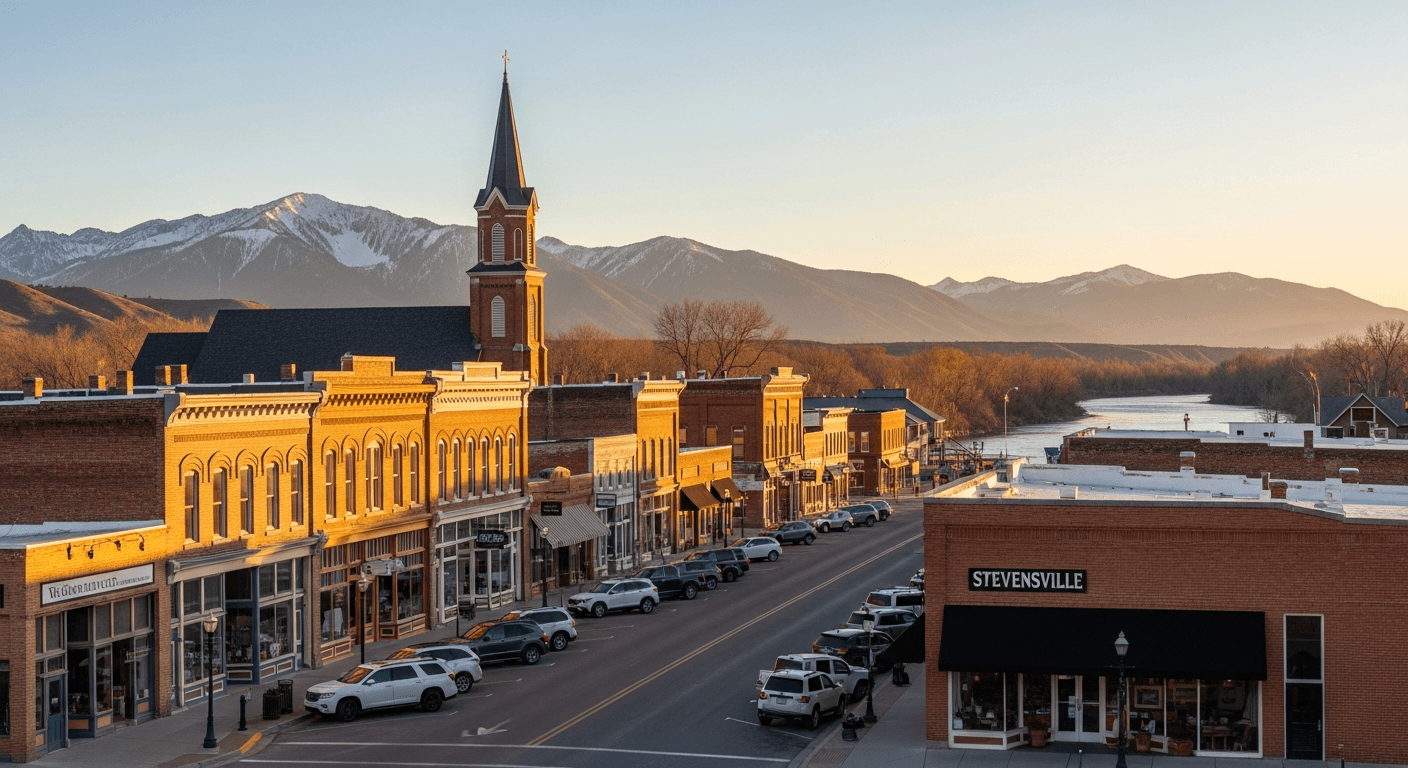
Bitterroot Valley
Stevensville Homes for Sale
Translate acreage, access, condition, utilities, intended use, and ownership priorities into property-specific evidence before touring or offering.
How should you evaluate a Stevensville property?
Stevensville buyers usually begin with a broad goal: more land, a particular property type, a practical route to work or services, or room for a planned use. The useful next step is not to assume a listing satisfies those priorities, but to translate each one into documents, inspections, quotes and recorded facts that can be checked against the exact property. That matters more here than in most states, because Montana is a non-disclosure state and recorded sale prices are never public, so attributes rather than price history carry the argument. Parcel geometry, ownership and assessment data are published through Montana Cadastral as of 2026, while water rights are a separate interest administered by DNRC and do not automatically convey with the land.
Use the existing Stevensville search experience to identify candidates, then compare them through the same diligence framework. Current availability, price, status, acreage, access, condition, utilities, and other property facts must be confirmed from current listing information and property-specific evidence.
Request a property shortlist and address-specific buyer diligence with Montana Lux Real Estate.
What criteria should you start from?
Create a shortlist using objective requirements rather than subjective neighborhood labels. Useful criteria include:
- total budget and a reserve for inspections, repairs, and ownership costs;
- verified property type, parcel configuration, and documented acreage;
- intended use and the records or approvals that use may require;
- legal and physical access, road condition, and maintenance obligations;
- well, septic, utility, and communications requirements;
- condition tolerance and the scope of professional inspections;
- lender, insurer, appraisal, and closing constraints; and
- buyer-defined travel routes and service access checked at the times that matter to the buyer.
These filters narrow a search. They do not establish that any specific Stevensville property meets them.
How do you verify acreage, boundaries and recorded rights?
Treat advertised acreage and visible fence lines as starting points. Match the listing to the correct parcel and review the deed, preliminary title work, recorded easements, plats, and any available survey. Montana cadastral and county reference tools can help identify questions, but an online map is not a boundary survey or title opinion.
For each candidate, ask:
- Do the parcel identifier, legal description, and listing refer to the same property?
- Is the represented acreage supported by recorded documents or a survey?
- Are access, utility, irrigation, shared-road, or other easements recorded?
- Do covenants, maintenance agreements, or other recorded obligations affect the intended use?
- Does the buyer need a new survey or specialist review before relying on a boundary or improvement location?
Is the access legal or just physical?
A road visible on a map does not by itself establish a transferable legal right to use it. Review recorded access documents and compare them with the physical route. Identify who owns and maintains each road segment, whether an agreement allocates costs, and whether gates, bridges, drainage, snow, or seasonal conditions affect the buyer’s plan.
Check current Montana travel information for public-road conditions, then verify private-road facts through recorded documents, inspections, maintenance records, and direct observation. Avoid relying on a fixed commute time: test the routes important to the buyer under realistic conditions.
Drive time is the variable that shifts most across this valley, and it shapes daily life more than any other factor. Our honest answer to whether the Bitterroot Valley is a good place to live compares the corridor from Florence to Darby, including where services thin out and what owning acreage actually costs.
What should you confirm about water, well and septic?
Rural-property systems require file-specific review. If a property is represented as having a water right, match the claimed right to current Montana Department of Natural Resources and Conservation records and to the proposed conveyance. Confirm priority, place of use, purpose, ownership, and transfer questions with qualified professionals. Do not assume that a ditch, creek, pond, well, or irrigation equipment proves a usable or transferable right.
For wells and onsite wastewater systems, request permits, logs, maintenance records, water-quality information, pumping or flow evidence where appropriate, and qualified inspections. Confirm the system’s relationship to the parcel and intended occupancy. Verify electric, gas or fuel, internet, waste, and other service details directly with the relevant providers; nearby infrastructure does not guarantee service, capacity, cost, or connection terms.
How do you review condition and planned work?
Order inspections appropriate to the property and the buyer’s intended use. A general inspection can identify visible conditions, but it cannot guarantee future performance or reveal every defect. Depending on the property, additional review may involve structure, roof, drainage, electrical, plumbing, heating, environmental conditions, pests, septic, well, water quality, roads, outbuildings, or site conditions.
Before assuming that an addition, outbuilding, remodel, business activity, rental plan, agricultural use, shoreline project, or other work is allowed, verify current jurisdiction, zoning, permits, subdivision requirements, recorded restrictions, and professional advice for that exact parcel. No listing description should substitute for that review.
What will the property cost to own?
Purchase price is only one input. Build an address-specific ownership model that can include:
- current tax records and assessment inputs;
- insurance quotes based on the exact property and intended use;
- lender requirements, appraisal conditions, and Loan Estimate comparisons;
- well, septic, road, utility, fuel, and maintenance costs;
- inspection and specialist-review costs;
- association, covenant, or shared-maintenance obligations if documented; and
- near-term repair or capital needs supported by inspections and quotes.
Flood maps and other public references can frame questions, but the buyer should obtain exact-address evidence and insurer guidance rather than infer a zone, premium, or insurability result.
How do you compare properties consistently?
Compare shortlisted properties in one table. Record the evidence source and unresolved question for each category:
| Category | Evidence to collect | Decision question |
|---|---|---|
| Parcel | Deed, legal description, cadastral reference, survey | Is the property being compared the exact parcel represented? |
| Acreage and boundaries | Recorded documents and survey evidence | Can the buyer rely on the represented size and improvement locations? |
| Access and roads | Title, easements, agreements, inspection | Are legal rights, physical access, and maintenance obligations acceptable? |
| Water and utilities | DNRC records, permits, provider confirmations | Do verified rights and services support the intended use? |
| Condition | Inspections, records, specialist reports, quotes | What conditions, repairs, and contingencies affect the offer? |
| Land use | Current jurisdiction and recorded restrictions | Is further professional or agency review needed before relying on a planned use? |
| Ownership cost | Tax record, insurer and lender quotes, maintenance evidence | Does the complete property-specific budget remain workable? |
Mark unknowns as unknown. A disciplined shortlist is not the one with the fewest questions; it is the one where the material questions are identified before the buyer relies on an assumption.
Ready for a showing or an offer?
Before touring, confirm the current listing status and ask for available property records. During the showing, compare visible conditions with the documents already collected and note where specialist review is needed. Before offering, coordinate the inspection, financing, appraisal, title, insurance, and record-review timeline with the buyer’s agent, lender, attorney or title professionals, inspectors, and other qualified advisers as appropriate.
Explore the broader Montana communities directory for geographic context, but keep the approved Stevensville route as the commercial owner for this search.
Use the contact page to define the exact budget, property form, acreage, access, condition, intended-use, financing, and timing criteria for the search.
This educational framework is not a representation about current inventory or any property, and it is not legal, tax, engineering, surveying, lending, insurance, inspection, or investment advice. Verify the exact property, records, contract, quotes, and deadlines with qualified professionals.
What else do Stevensville buyers ask?
- Do water rights transfer with a Stevensville property?
- Not automatically. A water right in Montana is a separate property interest from the land, administered by DNRC, and whether it conveys depends on how the transaction is written. Verify the right against DNRC records and confirm the conveyance with your title company before closing.
- What is the difference between legal and physical access?
- A road reaching the property is physical access. Legal access is a recorded right to use it, such as a county-maintained road or an easement that runs with the land. Unrecorded historical use is not a right, and lenders may decline a property without clear legal access.
- How do I verify a property’s acreage and boundaries?
- Fence lines are not boundaries. Start with parcel geometry and ownership on Montana Cadastral, then use a current survey where the difference carries real money. On steeper ground, usable acreage can be a fraction of deeded acreage.
- Is the property on well and septic?
- Many Stevensville-area properties outside municipal services are. Where that applies, water supply and septic suitability are purchase questions rather than maintenance questions: septic is determined by soil testing and permitted through the county, and well yield can vary between early and late season.
- What should be budgeted beyond the purchase price?
- Property taxes, insurance including any wildfire consideration, utilities, road maintenance where access is private, inspections, and near-term capital items. Model these from current documents and quotes for the specific property rather than from a general figure.
- Does this page confirm a specific property is available?
- No. Current availability, price, status, acreage, access, condition and utilities must be confirmed from current listing information and property-specific evidence before you rely on them.