Fly Fishing River Frontage Estates in Western Montana
By Ashley Inglis — Broker | Owner, MT Lux Real Estate | REALM Global Member | CLHMS, ABRA river running through your own property is one of the most sought-after things money can b
By Ashley Inglis — Broker | Owner, MT Lux Real Estate | REALM Global Member | CLHMS, ABR
A river running through your own property is one of the most sought-after things money can buy in Western Montana. It is also one of the most misunderstood. The difference between a parcel that touches blue-ribbon water and a parcel that simply sits near it can be hundreds of thousands of dollars — and the legal fine print behind "river frontage" shapes both the price and what you can actually do with the land.
I have spent my career helping buyers and sellers read past the listing photos to the underlying facts. This guide walks through what a fly-fishing or river-frontage estate really involves: the marquee rivers, what frontage is worth, the legal categories that look similar but behave very differently, and the due diligence I insist every buyer complete before closing.
The Marquee Rivers of Western Montana
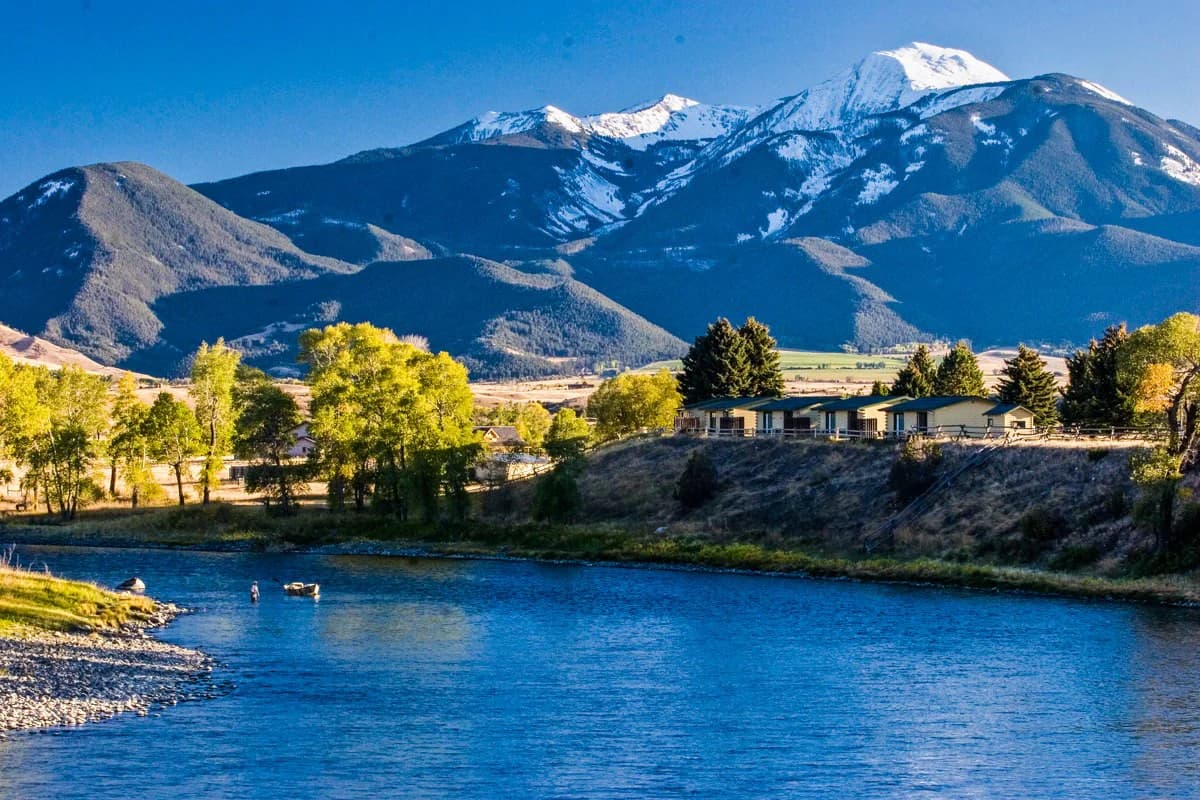
Western Montana's reputation rests on a short list of rivers that anglers travel across the country to fish. The Bitterroot, the Clark Fork, and the Blackfoot are all designated Blue Ribbon trout streams, each holding wild trout populations measured in the thousands per river mile. Rock Creek, which joins the Clark Fork roughly 20 miles upstream of Missoula, carries the same Blue Ribbon designation and is known for high trout densities and classic pocket water. The Big Hole, a little farther southeast, rounds out the region's most coveted waters.
Blue Ribbon status is not a marketing term. In the United States, only a handful of states carry waters with the official designation, and it is awarded on the basis of water quality and quantity, accessibility, natural reproduction, angling pressure, and the species present. When frontage touches one of these rivers, the designation is part of what a buyer is paying for — and part of what holds value over time.
The Bitterroot is the home river for much of my market. It runs the length of the Bitterroot Valley through Hamilton, Stevensville, and the smaller communities in between, with side channels and braided sections that create the kind of private-feeling water buyers picture when they imagine a Montana estate.
What "Blue-Ribbon Frontage" Means for Value
Not all frontage is equal, and the river itself is only part of the story. Buyers and brokers tend to weigh several factors together: the length of frontage, whether it touches the main stem or a side channel, the quality of the holding water, privacy from public access points, and how much of the bank is actually usable versus locked up in floodplain or wetland.
A property with nearly a mile of main-stem Bitterroot frontage on a large legacy parcel sits in a very different tier than a lot with a few hundred feet on a seasonal side channel. Both can be marketed as "river frontage," and both have value — but the buildable, main-stem, low-public-pressure parcels are the ones that stay scarce. As of 2026, brokers in the Bitterroot Valley describe genuinely buildable river-front land as increasingly hard to find, even as overall county inventory has loosened compared with the frenzied years earlier in the decade.
Deeded Frontage vs. Access Easements vs. Limited Build Rights
This is where many buyers get surprised, and it is the section I spend the most time on with clients. Three things can all look like "river access" in a listing and mean very different things.
Deeded frontage means the parcel's legal boundary runs to the river. You own the bank to the property line described in the deed. This is the category most buyers assume they are getting.
Access easements grant a right to reach or cross to the water without owning the frontage itself. An easement can be shared, limited to certain uses, or tied to specific seasons. It is a real and valuable right, but it is not ownership of the bank.
Frontage with limited build rights describes parcels where you own the riverfront but cannot build where you might expect — because of a conservation easement, floodplain regulation, setback requirements, or a prior subdivision restriction.
The takeaway is simple: read the deed, the title commitment, and any recorded easements before you fall in love with the view. My standard practice is to order title early and have a Montana real estate attorney review anything ambiguous, because the language that distinguishes these categories is rarely in the marketing copy.
Montana's Stream-Access and Water-Rights Nuances
Two distinct bodies of law sit underneath every river property, and both deserve specialist attention rather than assumptions.
The first is stream access. Montana's Stream Access Law, passed in 1985, generally allows the public to use most natural waterways for fishing, floating, and related recreation up to the ordinary high-water mark, provided people enter from public access points or public land. Owning frontage does not, on its own, give you exclusive control of the water flowing past your bank. This is settled Montana policy, and it surprises buyers from states where riverfront ownership implies private water. How it applies to any specific parcel — fences, bridges, easements, historic access points — can be fact-specific, and I advise confirming the particulars rather than relying on a general rule.
The second is water rights, which in Montana are a separate property interest from the land and are notoriously detailed. The state continues to refine the system: legislative changes to Montana's Water Use Act took effect in early 2026, and the Department of Natural Resources and Conservation has been issuing notices tied to adjudicated basins. Whether a property carries irrigation or other water rights, and whether those rights are in good standing, is not something to infer from the presence of a ditch or a green pasture. My guidance here is direct: treat water rights as their own due-diligence item and bring in a water-rights professional or attorney. The cost of that review is small next to the cost of assuming a right you do not actually hold.
Conservation Easements and Their Tradeoffs
Many of the larger river parcels in Western Montana carry a conservation easement — a voluntary, usually permanent agreement between a landowner and a land trust that limits development to protect open land, wildlife habitat, and riparian corridors. For the right buyer, an easement is a feature: it guarantees that the ranch across the river will not become a subdivision, and it can carry tax considerations worth discussing with a CPA.
The tradeoff is flexibility. A conservation easement commonly restricts subdivision, new residential lots, commercial development, and alterations within the riparian buffer along the river. It typically reserves existing home use, agriculture, fencing, and recreation such as fishing and hunting — but the specifics live in the easement document, not in a general summary. A buyer who wants to add a guest house, split the parcel, or build near the bank needs to read the recorded easement closely and confirm what is actually permitted. I walk clients through the easement language line by line before they decide whether the protection is a benefit or a constraint for their plans.
Flood, Setback, and Riparian-Buffer Realities
The same water that makes a property special also imposes real-world limits on where and how you build. River parcels frequently include mapped floodplain and floodway, and county regulations govern setbacks from the high-water mark and disturbance within the riparian buffer. These rules affect the building envelope, septic placement, and sometimes insurance and financing.
None of this should scare a buyer off — well-sited Montana river homes are built every year. It simply means the homesite needs to be confirmed before purchase, not after. I coordinate with surveyors and county planning so clients understand the buildable area, the setbacks, and any permitting realities up front, rather than discovering them during design.
Price Ranges as of 2026
Pricing on river frontage spans a wide band because the variables above move it so much. For context, the broader Ravalli County single-family market sat near a median in the high $500,000s as of 2026, with inventory more balanced than in recent years and days on market around the hundred-day range. River-frontage estates trade well above that median, and the premium scales with frontage length, main-stem versus side-channel water, acreage, improvements, and privacy.
Smaller frontage parcels and modest river homes generally start in the seven figures, while legacy parcels — large acreage with extensive main-stem frontage and significant improvements — reach multiples of that. Rather than quote a single number, I prefer to price each property against its specific frontage, water quality, build rights, and easement status, because two listings with similar headline acreage can be worlds apart in value. Buyers should expect a custom comparative analysis, not a per-acre rule of thumb.
Who Buys These Properties
River-frontage estates in Western Montana draw a recognizable mix: anglers who want blue-ribbon water out the door, families assembling a multigenerational legacy property, out-of-state buyers relocating to the Bitterroot Valley and the Missoula corridor, and buyers who value the permanence that a conservation easement can guarantee. What they share is a long time horizon. These are rarely quick-flip purchases; they are properties people intend to hold, fish, and pass on.
That long horizon is exactly why the legal due diligence matters so much. The buyer who confirms deeded frontage, understands stream access, verifies water rights, and reads the easement before closing is the buyer who enjoys the river for decades without an unwelcome surprise.
About Me
I bring verified credentials to a market where claims are easy to make and hard to confirm. I am a RealTrends Verified 2025 honoree, ranked #53 in Montana by sales volume and #30 by transaction sides for that year. I am a Global Member of REALM, a Certified Luxury Home Marketing Specialist (CLHMS), and an Accredited Buyer's Representative (ABR), and I have been recognized as a Montana Top Producer. Over my career I have closed more than 100 transactions and recorded more than $18M in volume in 2024 alone. I hold Montana broker license RRE-BRO-119277 and operate as a Broker and Owner from my office at 102B Main St, Stevensville, MT 59870.
Working With Me
Buying a fly-fishing or river-frontage estate is as much a legal exercise as a real estate one, and I treat it that way. I help buyers separate deeded frontage from easements, coordinate the title, survey, water-rights, and easement reviews that protect a purchase, and give honest guidance on what a specific property is worth — and what it is not. If you are considering a river property anywhere across Western Montana, I am glad to walk the water with you and help you do the homework before you commit.
Reach me directly at (406) 880-5985 or ashleyinglis@ainglisrealty.com, or start a conversation through the contact page. You can also explore Montana waterfront luxury homes on lakes and rivers, or learn more about the communities I serve in Hamilton and Stevensville.
Ashley Inglis is a Western Montana Broker, RealTrends Verified 2025 honoree, REALM member, Certified Luxury Home Marketing Specialist (CLHMS), and Accredited Buyer's Representative (ABR), serving buyers and sellers across Missoula, Whitefish, Bigfork, Hamilton and surrounding Montana luxury markets.
Frequently Asked Questions
What does "deeded river frontage" actually mean in Montana?
Deeded frontage means the legal boundary of the parcel runs to the river, so you own the bank up to the property line described in the deed. It differs from an access easement, which grants a right to reach the water without owning the frontage. Always confirm the category in the title commitment and recorded documents before assuming you own the bank.
Do I control the water if I own river frontage?
Not exclusively. Under Montana's Stream Access Law, the public can generally use natural waterways for fishing and floating up to the ordinary high-water mark, provided they enter from public access points or public land. Owning frontage does not give you exclusive control of the river. How the law applies to a specific parcel can be fact-specific, so confirm the details for any property you consider.
Are water rights included when I buy river-frontage land?
Not automatically. In Montana, water rights are a separate property interest from the land, and a property may or may not carry irrigation or other rights in good standing. Recent changes to Montana's Water Use Act took effect in early 2026. I advise treating water rights as their own due-diligence item and bringing in a water-rights professional or attorney to verify them.
What is a conservation easement and how does it affect building?
A conservation easement is a voluntary, usually permanent agreement that limits development to protect open land and riparian habitat. It commonly restricts subdivision, new residential lots, and alterations within the riparian buffer, while reserving existing home use, agriculture, and recreation. The specifics live in the recorded document, so read it closely before assuming you can add a guest house or split the parcel.
Can I build wherever I want on a river parcel?
Usually not. River parcels often include mapped floodplain and floodway, and county rules govern setbacks from the high-water mark and disturbance within the riparian buffer. These limits shape the building envelope and septic placement. Confirm the buildable area with a surveyor and county planning before purchase, not after.
How much do river-frontage estates cost in Western Montana as of 2026?
Pricing varies widely with frontage length, main-stem versus side-channel water, acreage, improvements, and privacy. For context, the broader Ravalli County single-family median sat in the high $500,000s in 2026. River-frontage estates trade well above that, with smaller frontage parcels generally starting in the seven figures and legacy parcels reaching multiples of that. I price each property against its specific attributes rather than a per-acre rule.
Why is legal due diligence so important for these purchases?
Because the categories that look alike — deeded frontage, easements, limited build rights — behave very differently, and because stream access, water rights, conservation easements, and floodplain rules each carry their own fine print. Confirming all of them before closing is what protects a long-term investment in a property you intend to hold and pass on.
Get in Touch
Ready to talk about your Montana move?
Ashley Inglis and the MT Lux team are ready when you are. Reach out for a private consultation about buying, selling, or just exploring the market.
More Reading