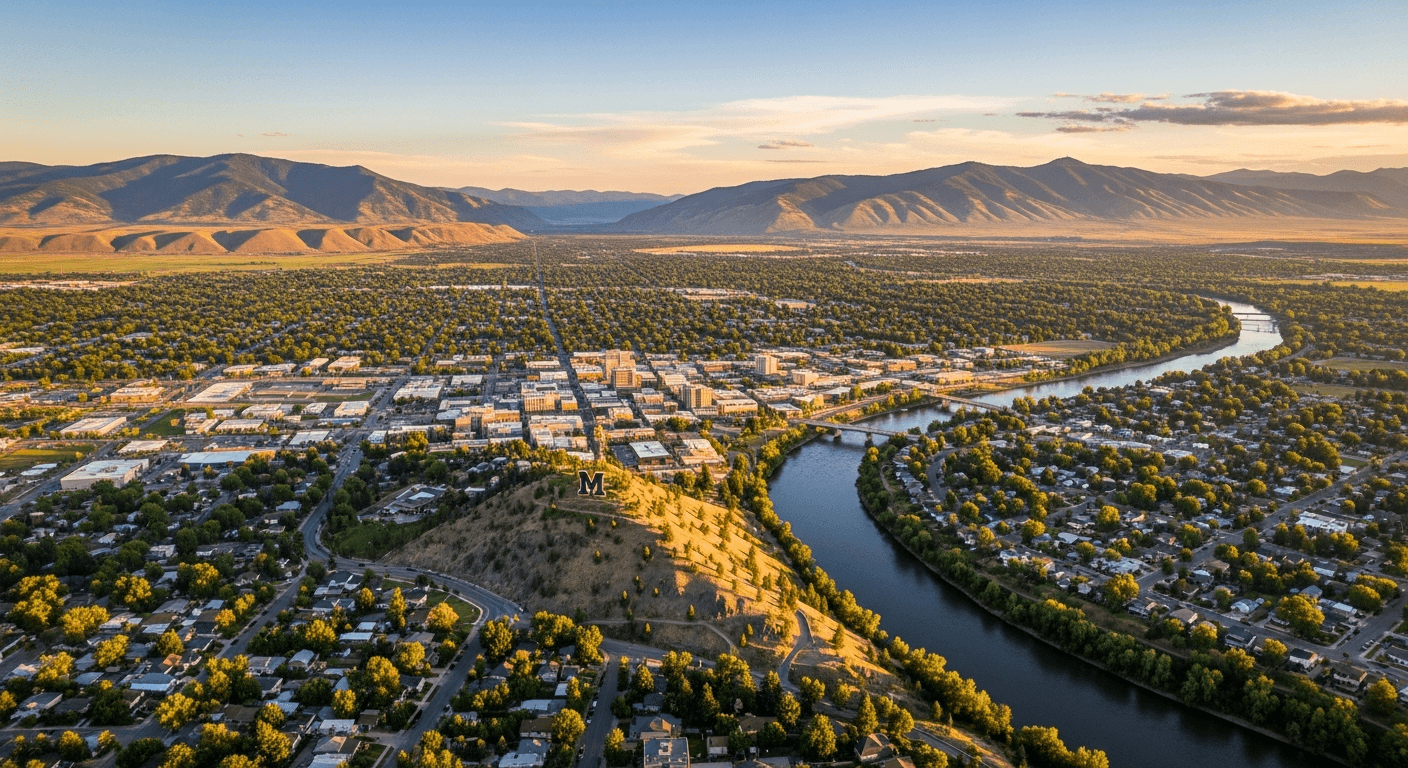
Missoula, Montana
Is Missoula, Montana a Good Place to Live?
The honest version, from a broker who lives in the valley — who Missoula suits, what it actually costs, and the trade-offs worth knowing before you commit.
Recognized Excellence



Yes for most people — with one significant caveat. Missoula offers a walkable downtown, a university town's cultural depth, rivers and trailheads inside the city limits, and an airport with direct flights to a growing list of hubs. The caveat is affordability: home prices rose faster than local wages between 2020 and 2024, so Missoula fits remote earners, retirees and relocating professionals far more comfortably than it fits someone taking a local service-economy salary.
The rest of this page is the detail behind that answer: what a household actually spends, which parts of town suit which lifestyles, what winter is really like, and the specific circumstances where the answer flips to no. Written by Ashley Inglis, a Montana Broker based in Lolo who works the Missoula and Bitterroot corridor weekly.
The Short Answer
Who Missoula Fits — and Who It Does Not
Almost every honest answer to this question is really an answer to a narrower one: good for whom? Here is the split as it plays out in practice with relocation buyers.
- Strong fit — remote workers and location-independent earners. An income set by a coastal or national employer goes a long way here, and the outdoor access is the reason most of them come.
- Strong fit — retirees and semi-retirees. Healthcare is genuinely good for a city this size, the airport keeps family reachable, and Montana does not tax Social Security the way some states do. Confirm your own situation with a Montana-licensed tax advisor.
- Good fit — outdoor-first households. The Clark Fork and Bitterroot rivers, Rattlesnake Wilderness, Snowbowl, and Lolo National Forest are all inside a short drive. This is the core of the appeal and it is not exaggerated.
- Mixed fit — families needing two local incomes. Local wages have not kept pace with housing. It works, but the budget is tighter than newcomers expect.
- Weak fit — anyone needing a big-city job market. Outside healthcare, the university, and a handful of employers, the professional job market is thin. Most newcomers bring their income with them.
- Weak fit — anyone who dislikes winter driving or gray skies. See the winter section below. This is the most common reason people leave.
The Numbers
What Living in Missoula Actually Costs
Housing is the line that decides the answer for most households. Everything else is close enough to the national average that it rarely changes a decision.
- Housing. Missoula is among the more expensive markets in Montana, running ahead of the Bitterroot Valley for comparable homes and well behind the Flathead luxury tier. Entry-level in-town inventory is limited; most of the volume sits in the middle tier.
- No state sales tax. Montana is one of five states without one. On everyday spending this is a real, permanent advantage over most of the states people move from.
- State income tax. Montana levies a graduated state income tax on residents. It is meaningfully below California, roughly comparable to Idaho, and higher than Washington, Wyoming and Texas, which have none.
- Property taxes. Set by Missoula County against assessed values that are revalued on a cycle. Recent reassessments raised assessed values across the county, so check the current bill on any specific property rather than assuming the prior owner’s number.
- Utilities and fuel. Budget for winter heating and for more driving than an urban household is used to. Two vehicles is the norm outside the core neighborhoods.
- Wages. The gap between local wages and local housing is the single most important number for anyone planning to earn their income here rather than bring it.
Where to Live
How Missoula’s Areas Differ
Missoula is not one market. The parts of town price and live differently enough that treating them interchangeably is the most common and most expensive newcomer mistake.
University District and the Slant Streets
Walkable, close to downtown and campus, older housing stock with character and the maintenance profile that comes with it. Popular with faculty, professionals and anyone who wants to leave the car parked.
Rattlesnake and Lower Rattlesnake
Trail access straight out the door into the Rattlesnake National Recreation Area, a quiet residential feel, and a premium attached to both. Consistently among the most sought-after addresses in the city.
South Hills
Newer construction, larger lots and valley views, with more driving built into daily life. Popular with families wanting space and a newer home.
Grant Creek and Linda Vista
Grant Creek sits north with quick interstate access and a mix of established and newer homes. Linda Vista, south of the river, offers newer subdivisions and generally more house per dollar than the close-in neighborhoods.
Lolo, Frenchtown and the corridor
Just outside the city, these give you more land and a lower price per square foot in exchange for a commute. Lolo in particular functions as a Missoula suburb with Bitterroot Valley pricing pressure. Compare the Missoula-area communities before narrowing your search.
The Trade-Offs
Winter, Inversions and the Things People Complain About
Every market has drawbacks and the ones nobody mentions during a summer scouting trip are the ones that cause regret. Missoula’s are specific and worth planning around.
- Winter inversions. Missoula sits in a valley, and cold air settles in it. Multi-day stretches of gray, still, cold weather are a normal feature of December through February, not an anomaly. People who need winter sun struggle here.
- Snow and winter driving. Snow is regular but rarely extreme in town; the passes and the drive north or south are another matter. Winter tires are not optional if you plan to travel in the season.
- Wildfire smoke. Late summer can bring smoke from regional fires, with air quality that varies year to year. This is the trade-off nobody discusses in a June showing.
- Housing supply. Inventory in the desirable close-in neighborhoods is genuinely tight, and well-priced homes there still move quickly.
- Growth friction. Missoula has grown fast enough that traffic, school capacity and housing politics are live local conversations. It is a real place with real debates, not a brochure.
Common Questions
Frequently Asked Questions
- Is Missoula, Montana a good place to live?
- Yes, for most people. Missoula combines a walkable downtown, a university town’s cultural life, immediate river and trail access, and a regional airport. The main caveat is cost: housing has risen faster than local wages, so it suits remote earners, retirees and relocating professionals more comfortably than it suits households depending on local service-economy incomes.
- Is Missoula or Bozeman better?
- They solve different problems. Bozeman is wealthier, faster-growing, closer to Yellowstone and Big Sky, with higher housing costs and more national attention. Missoula is more affordable, more walkable in its core, has a stronger river and downtown culture, and feels less like a resort economy. Buyers prioritizing value and everyday livability tend to choose Missoula; buyers prioritizing ski access and a luxury market tend to choose Bozeman. See our Missoula vs Bozeman comparison.
- Why is Missoula called Zootown?
- It is a shortening of Missoula’s long-standing nickname, which itself comes from the city’s eclectic, anything-goes character and the way locals describe the mix of students, artists, outdoors people and old Montana families living in one valley. You will see it on local business names and merchandise throughout town.
- Does it snow a lot in Missoula?
- Missoula gets regular winter snow but less than Montana’s mountain resort towns, because the valley floor sits at a relatively low elevation. The more significant winter feature is the inversion: cold, gray, still air that settles in the valley for days at a time between December and February.
- What salary do you need to live comfortably in Missoula?
- It depends entirely on housing. A household buying at current prices needs an income well above the local median to carry a mortgage comfortably, which is why the market skews toward remote earners, retirees and relocation buyers. Anyone planning to earn locally should price a specific home and run the actual payment before committing to the move.
- What are the downsides of living in Missoula?
- Winter inversions and gray skies from December through February, late-summer wildfire smoke in some years, a thin professional job market outside healthcare and the university, and housing costs that have outpaced local wages. None of these are dealbreakers for most buyers, but all four are worth planning around rather than discovering after closing.
About the Author
Meet Your Western Montana Broker, Ashley Inglis
Ashley Inglis is a Western Montana Broker, RealTrends Verified 2025 honoree, REALM member, Certified Luxury Home Marketing Specialist (CLHMS), and Accredited Buyer’s Representative (ABR), serving buyers and sellers across Missoula, Whitefish, Bigfork, Hamilton and surrounding Montana luxury markets.
Next Steps
Schedule a Consultation with Ashley
Every consultation is private and tailored to your specific situation. Whether you’re evaluating Western Montana for the first time, considering a move within the region, or preparing to list, Ashley reviews each engagement personally before taking it on.