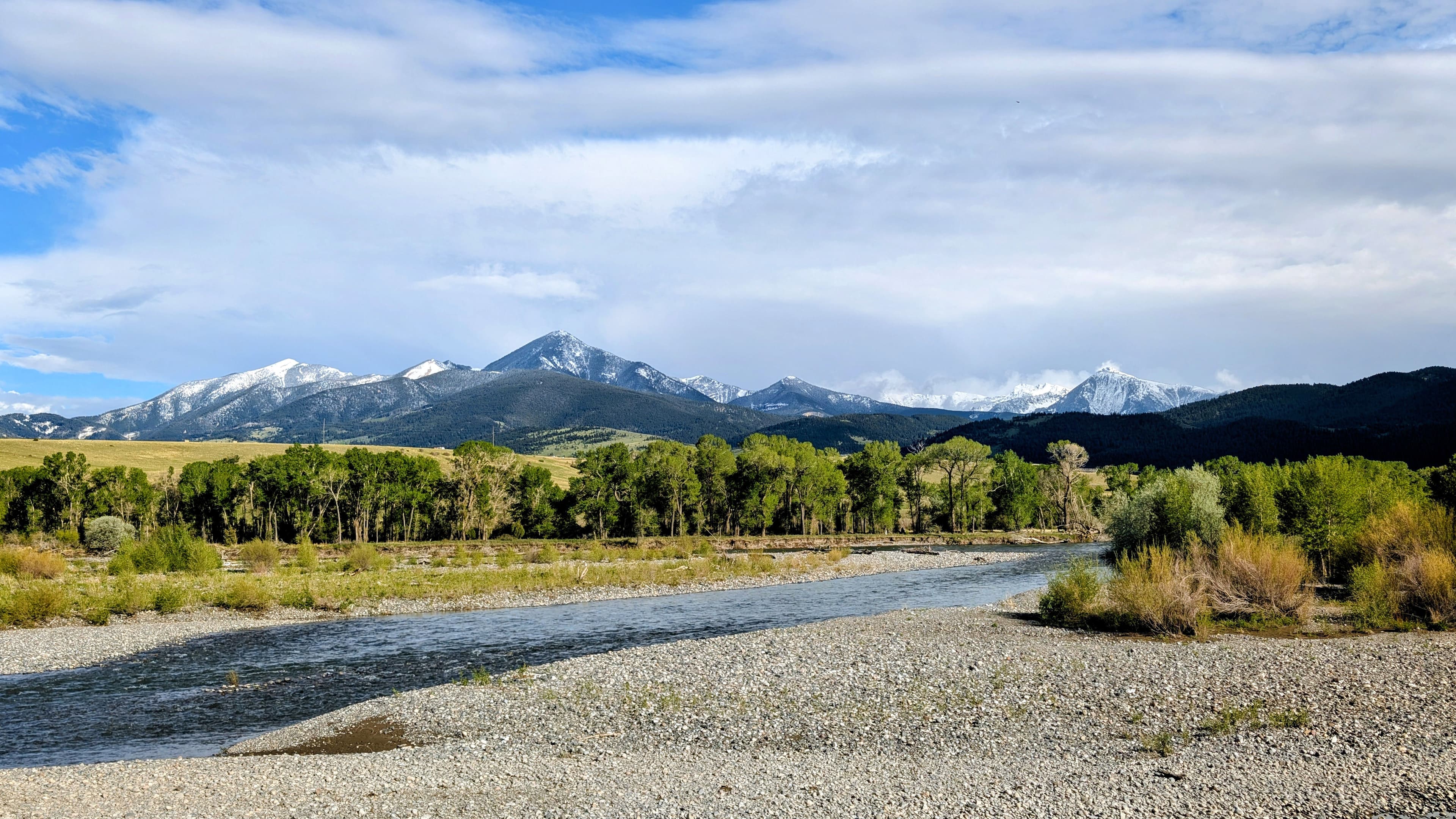
Bitterroot Valley, Montana
Is the Bitterroot Valley a Good Place to Live?
The honest version, from a broker at the north end of the corridor — who the valley suits, how the answer changes as you drive south, and what to check before you buy acreage.
Recognized Excellence




Yes — if you want land and quiet more than you want convenience, and if you are honest with yourself about the drive. The Bitterroot gives you more ground for the money than Missoula, a blue-ribbon trout river down the middle, and mountains on both sides. What it asks in return is a commute, thinner services, and a willingness to own a well and a septic system.
The part most buyers miss is that the Bitterroot is not one place. It is a roughly 60-mile corridor strung along a single highway, and the answer to this question changes completely depending on whether you land at the north end or the south. Florence is a Missoula suburb in everything but name. Darby is genuinely rural. Treating them as one market is the most expensive mistake newcomers make here. Written by Ashley Inglis, a Montana Broker based in Lolo at the top of the corridor, who works the Missoula and Bitterroot markets weekly.
The Short Answer
Who the Bitterroot Fits — and Who It Does Not
As with anywhere, the useful question is not whether the valley is good but whether it is good for your particular situation. Here is how it tends to play out with relocation buyers.
- Strong fit — anyone whose income is portable. If your work travels with you, the valley hands you acreage, river access and mountain views at a price the Flathead stopped offering years ago.
- Strong fit — buyers who actually want land. Not a large lot, but real ground: room for horses, a shop, a garden, a gravel drive. This is the valley’s core proposition and it delivers on it.
- Strong fit — households whose daily needs are met within one town. If you rarely need to leave Hamilton or Stevensville on a weekday, the commute question largely disappears.
- Good fit — buyers wanting a Missoula commute with more ground. Florence and the north end make this work. The further south you go, the less it works.
- Mixed fit — anyone needing frequent specialist healthcare. Hamilton has a hospital, but the deeper medical infrastructure is in Missoula. Plan around that rather than discovering it later.
- Weak fit — anyone who needs a local professional job market. Outside healthcare, the research laboratory in Hamilton, trades, schools and county work, local white-collar employment is thin. Most newcomers bring their income with them.
- Weak fit — anyone unwilling to drive. This is the single most common reason people leave. If a 50-minute grocery-and-hardware round trip sounds tiring in week one, it will not feel better in February.
Where on the Corridor
How the Answer Changes from Florence to Darby
US-93 runs the length of the valley and everything hangs off it. Drive-time to Missoula is the single variable that moves price, inventory and daily life more than any other, so it is worth being specific about it rather than thinking in terms of "the Bitterroot".
Florence and the north end
Close enough to Missoula that many households commute daily without thinking much about it. You are buying Missoula access with more land attached, and the pricing reflects that. This is the part of the valley that behaves most like a suburb.
Stevensville
The historic anchor of the valley — the site of St. Mary’s Mission, generally described as Montana’s oldest permanent settlement — with a walkable main street and acreage spreading east toward the Sapphires. Still a realistic Missoula commute for most people, with more town character than Florence. See the Stevensville community guide and current Stevensville market trends.
Victor and Corvallis
The pastoral middle of the valley. Quieter, more agricultural, with irrigated ground and some of the best straight-on views of the Bitterroot front. The Missoula commute becomes a decision rather than a routine.
Hamilton
The county seat and the valley’s service centre: the hospital, the courthouse, the widest range of shops and restaurants, and Rocky Mountain Laboratories, a federal biomedical research facility that is one of the largest employers in the county. If you want to live in the Bitterroot without driving to Missoula for ordinary needs, Hamilton is the answer. See the Hamilton community guide.
Darby and the south end
Genuinely rural, genuinely quiet, closest to the wild country and the most affordable ground in the valley. It is also the longest drive to anything, and winter makes that drive longer. People who love it really love it; people who bought it on a July weekend sometimes do not. Compare all six towns in the Bitterroot neighborhoods guide.
The Numbers
What Living in the Bitterroot Actually Costs
The valley generally buys more ground per dollar than Missoula, but acreage carries costs that a town house does not. Budgeting for the house alone is how people get surprised.
- Housing. The Bitterroot typically prices below Missoula for a comparable home and well below the Flathead luxury tier, with the discount widening the further south you go. Land and view are what you are paying for at the top of the market. See the Bitterroot cost of living breakdown.
- Well and septic. Most rural property here is on a private well and septic system. Both are your responsibility to maintain, test and eventually replace, and both belong in your inspection budget rather than your assumptions.
- Water rights and irrigation. Irrigated ground may come with ditch shares or water rights that have real value and real obligations. These do not always transfer the way buyers expect. Have them verified in writing before closing.
- No state sales tax. Montana is one of five states without one — a permanent advantage over most of the states people move from.
- Property taxes. Set by Ravalli County against assessed values that are revalued on a cycle. Recent reassessments moved values across Montana, so check the current bill on the specific property rather than the prior owner’s figure.
- Vehicles and fuel. Two vehicles is the norm, and at least one of them wants winter tires and clearance. Budget more driving than an in-town household is used to.
- Insurance. Wildfire exposure can affect availability and cost depending on the property. Get a quote on the specific address early, not after you are under contract.
The Trade-Offs
What Nobody Mentions on a Summer Visit
Every market has drawbacks, and the ones that cause regret are the ones invisible during a warm-weather scouting trip. The Bitterroot’s are specific and mostly plannable.
- One highway. US-93 is the valley’s only real artery. A crash, construction or weather event north of you does not have a convenient detour, and the corridor has grown enough that traffic is now a genuine local conversation.
- Wildfire and smoke. The valley has a serious fire history and much of the residential ground sits in the wildland-urban interface. Late-summer smoke varies year to year. Defensible space is a normal part of owning here, not an exotic precaution.
- Services are thin south of Hamilton. Deliveries, contractors, internet options and emergency response times all stretch as you go south. Check the actual broadband options at the actual address if you work from home.
- Winter driving. The valley floor is milder than much of Montana and gets less snow than the mountain towns, but the commute north and the passes are another matter entirely.
- Growth friction. Subdivision, water and road questions are live political topics in Ravalli County. Buying acreage next to open ground is not a guarantee the ground stays open — check the zoning and what is entitled around you.
Common Questions
Frequently Asked Questions
- Is the Bitterroot Valley a good place to live?
- Yes, for buyers who want land, quiet and outdoor access more than convenience, and who accept a commute for anything the valley does not provide locally. It generally offers more ground per dollar than Missoula, with a trout river down the middle and mountains on both sides. The honest caveats are the drive, thinner services south of Hamilton, wildfire exposure, and the reality that rural property means owning a well and a septic system.
- How far is the Bitterroot Valley from Missoula?
- It depends entirely where in the valley you mean, which is why the question matters so much. Florence at the north end is a short and routine commute. Stevensville remains realistic for most daily commuters. Hamilton, roughly the middle-south of the corridor, is closer to an hour each way. Darby at the south end is longer again. All of it runs on US-93, so plan drive times in winter conditions rather than summer ones.
- Is the Bitterroot Valley cheaper than Missoula?
- Generally yes for a comparable home, and the gap widens the further south you go. But the comparison is not like for like: much of what you buy in the valley is acreage, and acreage brings costs a town house does not — well, septic, longer driveways to plow, higher insurance in fire-exposed areas, and more vehicle use. Budget the property, not just the purchase price.
- What is the weather like in the Bitterroot Valley?
- The valley floor is milder than much of Montana and is sometimes called a banana belt for that reason, with less snow than the mountain resort towns. Winters are real but manageable at valley elevation; the mountains and passes on either side are a different proposition. Late summer can bring wildfire smoke, with air quality varying considerably year to year. See our guide to Western Montana winters and weather.
- What are the downsides of living in the Bitterroot Valley?
- A single highway with no practical alternate route, wildfire exposure across much of the residential ground, services and infrastructure that thin out south of Hamilton, a limited local professional job market, and more driving than most newcomers anticipate. None of these are dealbreakers for the right buyer, but all five are worth planning around rather than discovering after closing.
- Which town in the Bitterroot Valley should I look at?
- Start from your drive-time tolerance rather than the town name. If you need Missoula most weekdays, look at Florence or Stevensville. If you want the valley’s fullest range of services on your doorstep, look at Hamilton. If you want the most ground and the most quiet and the drive genuinely does not bother you, look at Victor, Corvallis or Darby. The Bitterroot neighborhoods guide compares all six in detail.
- Is the Bitterroot Valley better than the Flathead Valley?
- They suit different buyers. The Flathead offers a lake, a national park, a ski resort and a deeper luxury market, with prices and summer crowds to match. The Bitterroot is quieter, more agricultural, more affordable, and closer to Missoula. Buyers prioritising resort amenities tend to choose the Flathead; buyers prioritising land, value and everyday quiet tend to choose the Bitterroot. See the full Bitterroot vs Flathead comparison.
About the Author
Meet Your Western Montana Broker, Ashley Inglis
Ashley Inglis is a Western Montana Broker, RealTrends Verified 2025 honoree, REALM member, Certified Luxury Home Marketing Specialist (CLHMS), and Accredited Buyer’s Representative (ABR), serving buyers and sellers across Missoula, Whitefish, Bigfork, Hamilton and surrounding Montana luxury markets.
Next Steps
Schedule a Consultation with Ashley
Every consultation is private and tailored to your specific situation. Whether you’re evaluating Western Montana for the first time, considering a move within the region, or preparing to list, Ashley reviews each engagement personally before taking it on.